Compliance concerns: How can financial advisors embrace AI while protecting clients (and their businesses)
Artificial intelligence is helping financial advisors improve productivity, enhance client service and streamline operations. However, as AI adoption accelerates, new compliance risks are emerging that firms cannot afford to ignore.
At Schwab IMPACT 2026 in Boston, Adam Moseley, director of AI Consulting for Charles Schwab Advisor Services, interviewed Chris Stanley, founder of Beach Street Legal. Their discussion highlighted important regulatory considerations and practical steps advisory firms should take as they integrate AI into their businesses.
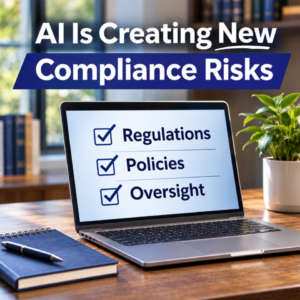 Mike Byrnes, owner of Byrnes Consulting, LLC, attended the conference and wrote this Rethinking65 article, “AI Is Creating New Compliance Risks for Advisors.”
Here are 10 key takeaways for financial advisors:
- The SEC is paying attention to AI. The SEC’s 2027 examination priorities address emerging technology risks, including cybersecurity threats, deepfakes and voice manipulation. Regulators are also examining how advisory firms use AI and whether they have appropriate policies, procedures and controls.
- Every advisory firm needs an AI strategy. Firms should assess how AI is currently being used, establish their risk tolerance and determine how they want to adopt the technology. A coordinated strategy is preferable to employees independently experimenting with AI tools without clear guidance.
- AI governance is becoming essential. Firms need policies identifying approved AI tools, permissible uses, restrictions on sharing confidential information and situations requiring human oversight. Employee education is equally important.
- Vendor due diligence requires greater attention. Advisors should understand how technology providers collect, store, share and protect client information. Important questions include whether client data is used to train AI models, where information is stored and what security protections are in place.
- Existing regulations still apply to AI. Current requirements continue to apply as firms adopt new technology. Using a third-party AI provider does not eliminate an advisory firm’s responsibility to safeguard client information.
- AI disclosures depend on how the technology is used. Using AI for basic research is different from using it to influence investment recommendations, trading or financial planning. Firms should evaluate when AI-related disclosures may be necessary and consider the importance of transparency with clients.
- AI policies should be practical and adaptable. Compliance manuals should address AI usage without becoming overly complicated. Policies that are too vague provide little guidance, while overly detailed rules can quickly become outdated as technology evolves.
- AI meeting assistants raise recordkeeping questions. AI-powered notetakers can improve productivity, but firms need to consider recording consent, transcript retention and applicable recordkeeping requirements. Sharing AI-generated meeting summaries with clients likely introduces additional compliance considerations.
- Human oversight remains critical. As agentic AI becomes more capable of performing tasks independently, firms should establish safeguards that prevent AI from making important decisions or modifying sensitive information without appropriate human review.
- AI compliance requires ongoing attention. Technology, regulations and vendor capabilities are evolving rapidly. Firms should regularly review their AI policies, employee practices and vendor relationships rather than treating compliance as a one-time exercise.
Financial advisors do not need to avoid AI because of compliance concerns. However, they should consider embracing the opportunities while implementing appropriate safeguards to protect their clients and businesses.
Successful AI adoption requires balancing innovation with responsibility
Firms that develop clear strategies, educate employees, evaluate vendors and maintain human oversight will be better positioned to benefit from AI while managing its risks.
Is Your Firm Ready to Adopt AI Responsibly?
AI offers tremendous opportunities for financial advisors, but firms need a thoughtful strategy to maximize its benefits while addressing potential risks.
Byrnes Consulting helps financial services firms develop AI strategies, improve business operations and identify opportunities for greater productivity and growth.
Mike Byrnes is also available for keynotes, breakout sessions and workshops on topics like AI, business strategy and organic growth.
Contact Byrnes Consulting to discuss how Mike can help your team.
Want to read Mike’s other posts from Schwab IMPACT 2026?
Mike’s front-row video of the Zac Brown Band.
Plus, see pictures from the conference.